



Solutions
From product selection and quality documentation to packaging and delivery, we help customers build a more reliable chemical supply chain.
When specialty chemicals justify a higher formulation cost
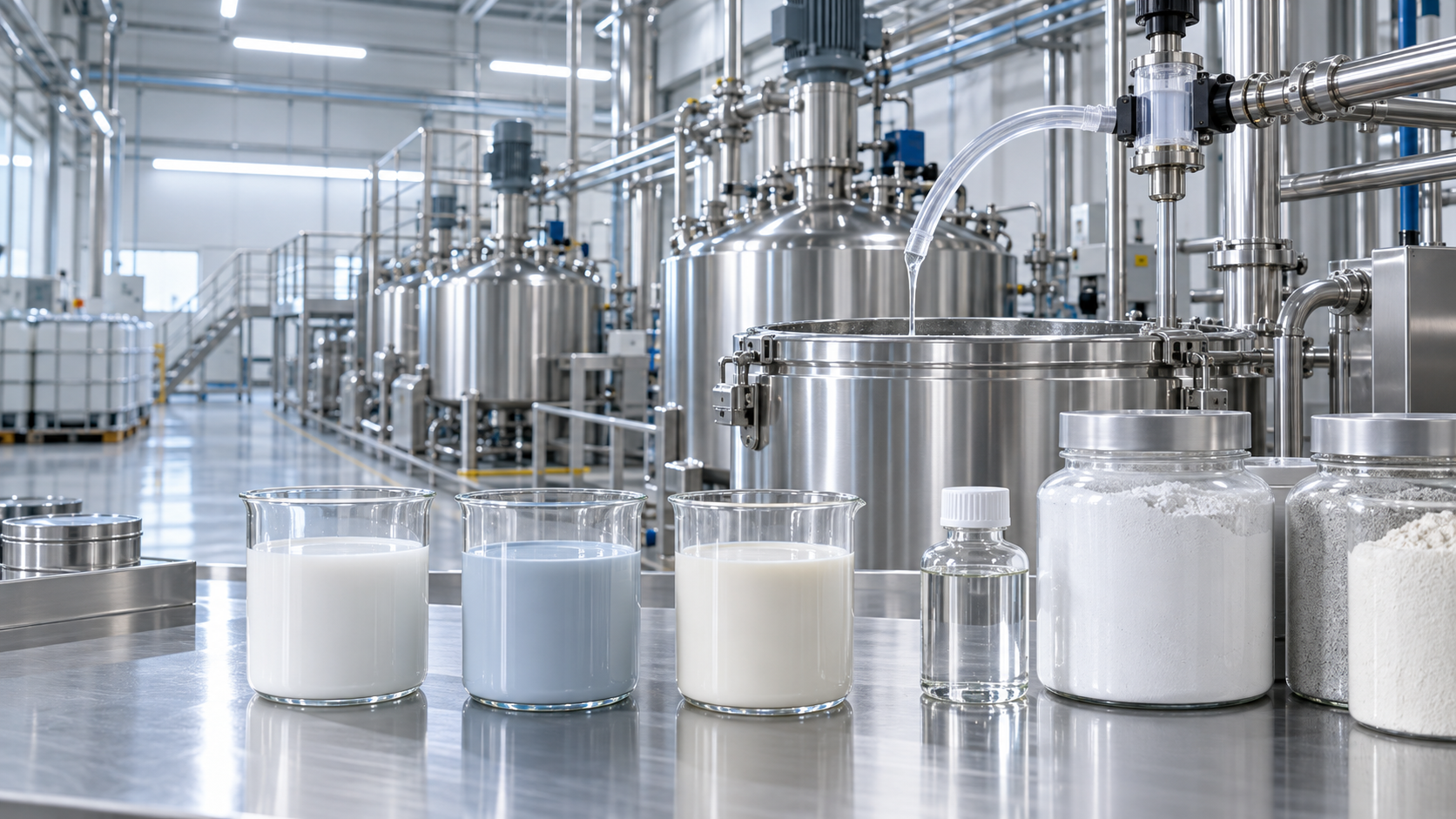
A higher formulation cost is justified when it improves the economics of the finished product, not simply when it improves a laboratory property. For a manufacturer, Specialty Chemicals earn their premium when they protect margin, reduce production loss, meet a necessary specification, or create a product difference that customers will pay for.
The unit price comparison is often misleading. A higher-cost additive, modifier, preservative, dispersant, stabilizer, or functional ingredient may be used at a low dosage, reduce rejects, shorten processing time, extend service life, or replace several lower-cost components. In those cases, the relevant calculation is formulation cost per saleable unit and lifecycle cost, rather than price per kilogram.
Start with the cost of the problem being solved
Specialty inputs should be evaluated against a defined operational or commercial problem. “Better performance” is too broad to support a procurement decision. The question is whether the material addresses a failure mode with a measurable cost.
For example, a more expensive stabilizer may be justified if it prevents viscosity drift that otherwise causes batch adjustments or disposal. A higher-grade dispersant may pay for itself if it improves pigment development enough to reduce milling time or rework. In water treatment, a specialty chemical can be viable when lower dosage, more consistent treatment performance, or reduced downtime offsets the higher purchase price.
Decision-makers should identify the baseline cost before comparing alternatives:
- Scrap, rework, off-spec production, and disposal cost
- Line speed, energy use, cleaning frequency, and labor burden
- Warranty exposure, field failures, returns, or customer complaints
- Costs associated with inconsistent appearance, odor, stability, or shelf life
- Revenue at risk where a formulation cannot meet a required customer or regulatory specification
Without that baseline, a premium material is easily treated as an avoidable purchasing expense even when it lowers total manufacturing cost.
A premium only works when the benefit survives production
Many Specialty Chemicals show an advantage in a controlled trial but deliver less value at plant scale. Compatibility with other raw materials, mixing order, shear conditions, temperature exposure, pH, moisture, and storage time can all change the result. A formulation benefit also has limited value if it makes processing less forgiving or requires tighter controls than the operation can maintain.
Before approving a higher-cost ingredient, procurement and technical teams should agree on a short set of acceptance measures. These may include dosage level, yield, processing window, batch-to-batch consistency, finished-product performance, and retained properties after storage or aging. The comparison should use equivalent commercial conditions, including realistic raw material variation, rather than a single best-case sample.
Dosage deserves particular attention. A material priced several times higher per kilogram may still reduce the cost contribution per batch if it performs at a much lower addition level. The reverse is also possible: a specialty product with an attractive technical profile can become uneconomic when its required dosage rises to accommodate other formulation constraints.
Margin protection can matter more than ingredient cost
Premium formulations are often justified where the finished product is differentiated by reliability, compliance, appearance, durability, or ease of use. In these categories, substituting a lower-cost chemical can expose the business to a larger risk than the apparent saving.
This does not require a product to be positioned as high-end. Industrial coatings, plastics, detergents, water-treatment products, agricultural formulations, and process chemicals may all depend on narrow performance tolerances. If a specialty component helps maintain those tolerances across normal production and use conditions, it can protect customer approval status and reduce the chance of costly reformulation later.
However, a higher formulation cost is difficult to defend when the performance gain is invisible to the buyer, does not lower internal operating cost, and does not support a required specification. In commodity-led applications with frequent price comparison and little performance differentiation, the lowest qualified total-cost option may remain the sounder choice.
Procurement risk should be part of the calculation
A specialty material can create value and still introduce supply risk. Single-source dependence, long lead times, incomplete technical documentation, shipment sensitivity, or inconsistent packaging can interrupt production and erase the expected benefit. For imported chemical materials, documentation, classification, packaging suitability, and delivery planning should be assessed alongside the technical specification.
That is why qualification should cover more than a certificate of analysis. Buyers need a clear specification, an agreed test method where relevant, controlled change notification, practical packaging requirements, and a supply plan that matches inventory tolerance. A cheaper alternative is not equivalent if it cannot be supplied with the same consistency or documentation.
The strongest business case for Specialty Chemicals is therefore specific: the material solves a known production, quality, compliance, or market-performance problem, its advantage is reproducible under normal operating conditions, and the supplier can support the required specification reliably. When those conditions are present, a higher formulation cost is an investment in margin and risk control. When they are absent, it is simply a higher cost.
Related Posts
- ▶ How to Assess Traceability and Supply Risk When Sourcing Plant Extracts
- ▶ What Documentation Should Quality Teams Require for Personal Care Ingredients?
- ▶ Selecting Dyestuffs and Pigments for Plastics: Lightfastness, Migration, and Heat Stability
- ▶ When rising personal care ingredient prices require formula changes
- ▶ What causes shade variation in dyestuffs and pigments?
- ▶ How batch variability affects pharmaceutical raw material quality