


Solutions
From product selection and quality documentation to packaging and delivery, we help customers build a more reliable chemical supply chain.
How to Assess Traceability and Supply Risk When Sourcing Plant Extracts
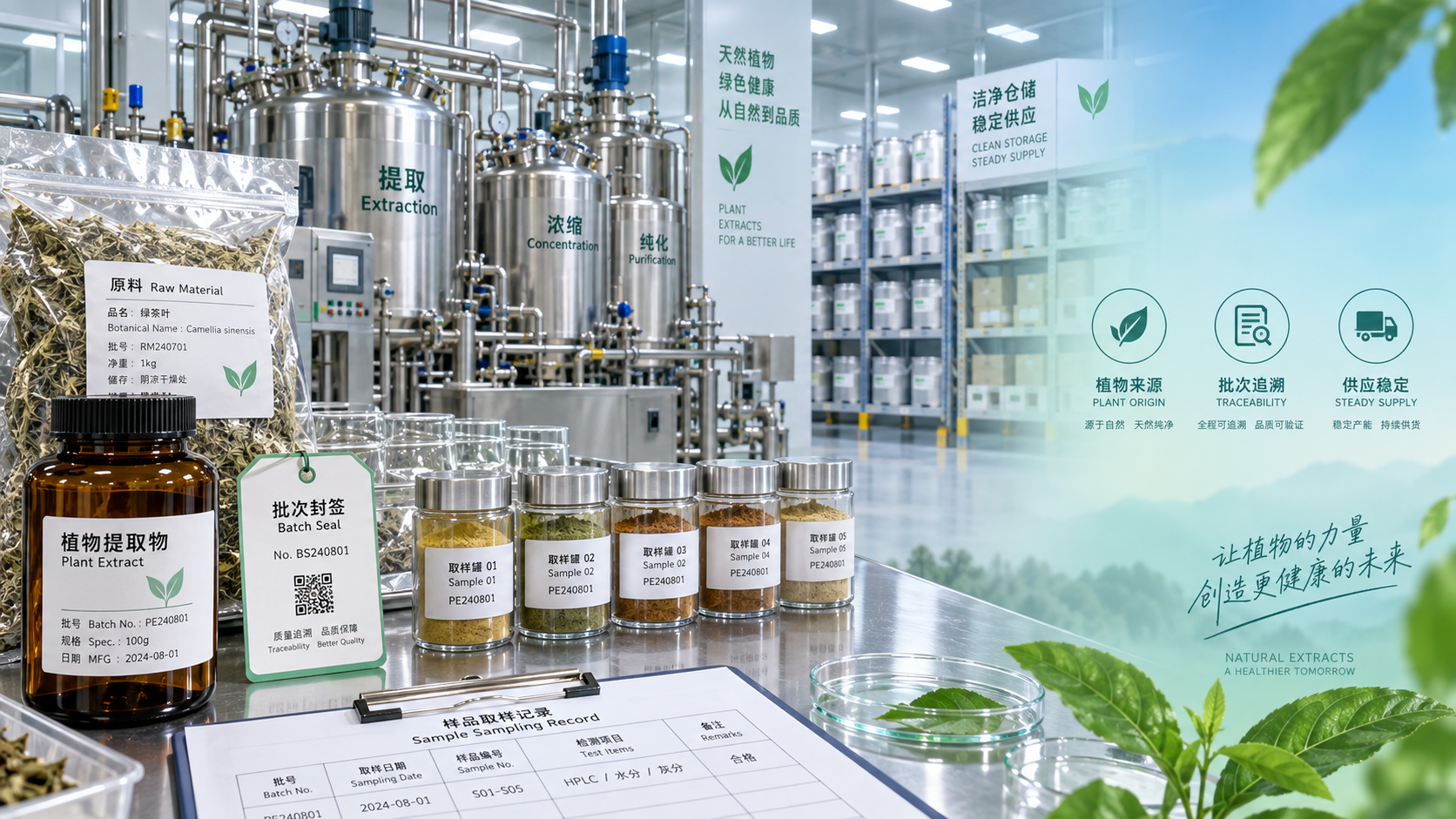
A low quotation can hide the most expensive problem in plant extract procurement: an ingredient that cannot be traced back to a defined botanical source, processing route, or lot history. For buyers, traceability is not paperwork for its own sake. It determines whether a material can be investigated after a quality deviation, replaced consistently, or kept in supply when harvest conditions change.
Plant extracts should therefore be assessed as supply-chain-controlled materials, not simply as products with a botanical name and an assay value. A supplier may offer an acceptable specification while still providing limited visibility into the raw herb origin, extraction batch, blending practice, or warehouse handling. That gap becomes significant when color, odor, marker content, solvent residue, or microbiological status varies between deliveries.
Start with the traceability chain, not the certificate
A certificate of analysis is useful, but it only describes the tested batch. It does not automatically establish how that batch was made or whether the next batch will be comparable. Ask suppliers to explain the chain from botanical raw material to shipped lot in practical terms.
- What is the accepted botanical identity, including plant part and, where relevant, varietal or chemotype requirements?
- Can the supplier identify the country or region of harvest and the party responsible for collection or cultivation?
- Is the extract produced from a single raw-material lot, or is it blended from multiple lots to meet a target specification?
- Are extraction solvent, carrier materials, standardization agents, and processing aids disclosed?
- Can the finished lot be linked to incoming herb records, production records, test results, and packaging records?
The level of detail required depends on the end use. A buyer sourcing extracts for a fragrance blend may prioritize olfactory consistency and adulteration controls. For materials used in regulated or sensitive formulations, the chain of custody, identity testing, contaminant controls, and change notification process should be much tighter.
Origin should also be treated carefully. “Origin” may refer to where the plant was grown, where it was collected, where extraction occurred, or where the material was repacked. These are different facts. Procurement documents should state which one is being claimed, rather than accepting an origin statement that cannot be tied to the actual raw material.
Test whether the documentation can support an investigation
The useful question is not whether a supplier has documents, but whether those documents allow a buyer to investigate a specific lot quickly. A traceable file should connect the purchase order, supplier batch number, internal batch number, manufacturing date, retest or expiry date, packaging configuration, and test report.
For plant extracts, a specification should go beyond a headline active-content figure where the material’s performance depends on composition. Marker assays can confirm a target compound range, yet they may not detect substitution, dilution, use of a different plant part, or excessive standardization with added material. Depending on the extract and application, buyers may need identity methods, chromatographic fingerprints, moisture and ash limits, residual-solvent information, microbiological controls, heavy-metal limits, pesticide controls, or relevant adulteration screening.
Do not assume every parameter must be tested on every delivery. The procurement decision is to define which risks are material for the intended use, then confirm how often each control is applied and which results are lot-specific. A generic specification copied across several extracts is a warning sign, especially when the botanical sources and extraction methods differ.
Assess supply risk at the raw-material level
Supply continuity for plant extracts often depends on conditions upstream of the extractor. Harvest season, weather exposure, cultivation concentration, collection practices, competing demand for the same herb, and transport restrictions can all affect availability or quality. A supplier holding finished inventory reduces some short-term risk, but it does not eliminate exposure if replacement stock depends on one harvest region or one processor.
Ask for a realistic view of supply structure:
- Is supply based on cultivated material, wild collection, or both?
- How many qualified sources exist for the required botanical and plant part?
- Can the supplier offer production from more than one qualified processor without changing the agreed specification?
- What is the normal lead time for repeat orders, and what happens outside the harvesting window?
- How are specification changes, source changes, or process changes communicated before shipment?
A common procurement mistake is to treat an extract with a broad specification range as inherently easy to substitute. A replacement may meet the written assay range while behaving differently in formulation because of color, odor, solubility, particle size, carrier content, or the broader phytochemical profile. Where continuity matters, retain a reference sample from approved lots and establish acceptance criteria that reflect actual manufacturing needs.
Compare quotations on a comparable basis
Price comparisons are meaningful only after normalizing what is being purchased. Two offers described with the same extract name may differ in native extract ratio, marker level, carrier percentage, solvent system, test scope, packaging barrier, and batch size. A lower price per kilogram may represent a lower concentration, a wider tolerance, reduced testing, or a more fragile supply route.
For repeat purchasing, the most useful supplier is often the one that can explain a deviation before it reaches the buyer. Build that expectation into supplier approval: require advance notice of changes to botanical source, extraction process, carrier system, testing method, manufacturing site, or packaging. This gives procurement and technical teams time to decide whether the change is acceptable, requires a trial, or needs an alternative source.
Plant extracts rarely become lower risk through documentation alone. Risk falls when the claimed identity, lot records, analytical controls, and supply plan tell the same story. That alignment gives buyers a sounder basis for awarding volume, setting safety stock, and deciding where a second qualified source is necessary.
Related Posts
- ▶ How to Assess Traceability and Supply Risk When Sourcing Plant Extracts
- ▶ What Documentation Should Quality Teams Require for Personal Care Ingredients?
- ▶ Selecting Dyestuffs and Pigments for Plastics: Lightfastness, Migration, and Heat Stability
- ▶ When rising personal care ingredient prices require formula changes
- ▶ What causes shade variation in dyestuffs and pigments?
- ▶ How batch variability affects pharmaceutical raw material quality