



Solutions
From product selection and quality documentation to packaging and delivery, we help customers build a more reliable chemical supply chain.
Selecting Dyestuffs and Pigments for Plastics: Lightfastness, Migration, and Heat Stability
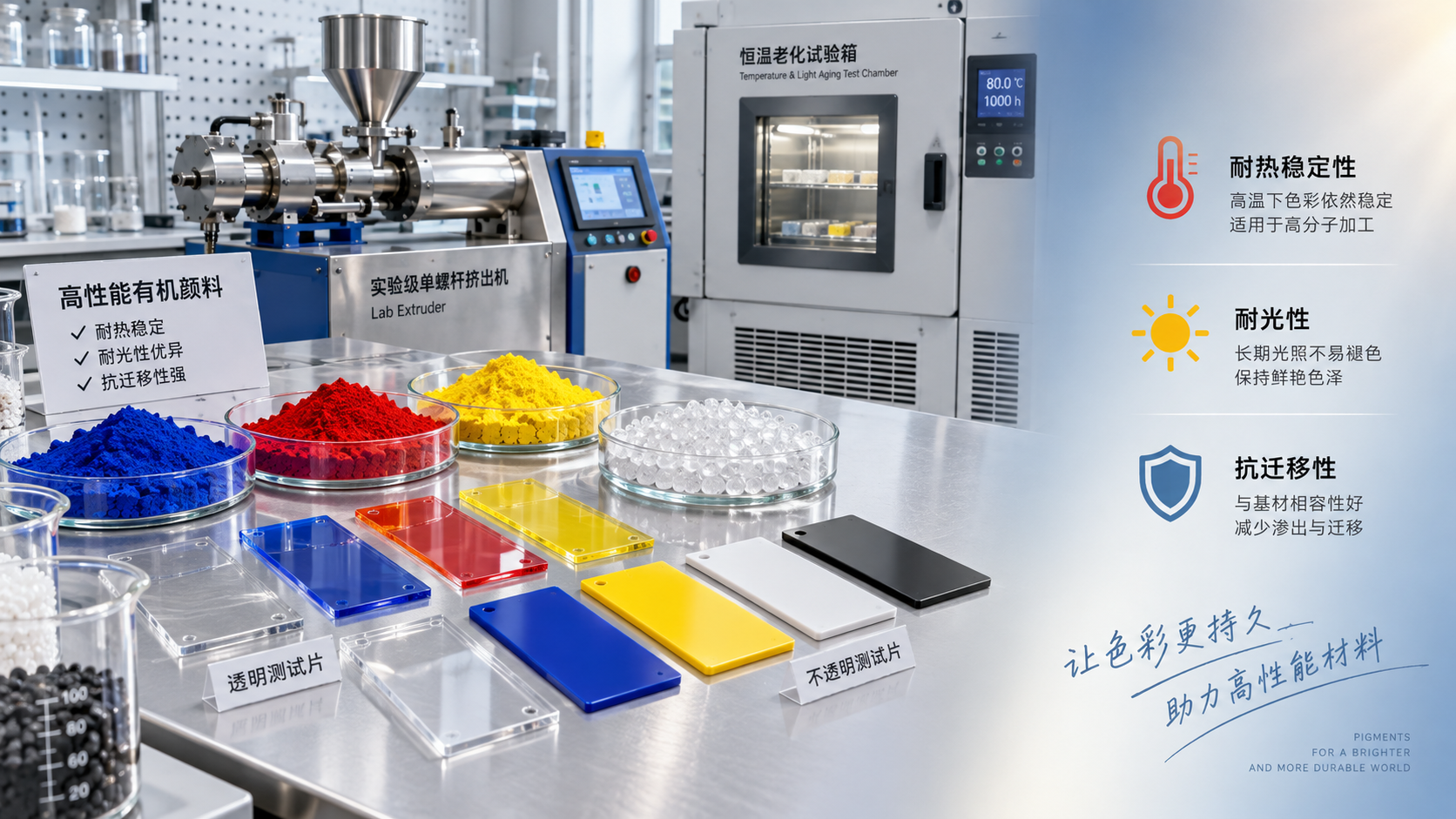
Selecting dyestuffs and pigments for plastics requires more than matching a target shade. Technical evaluators must balance lightfastness, migration resistance, heat stability, polymer compatibility, and processing conditions.
The correct colorant is the one that remains stable through compounding, molding, service exposure, and contact with adjacent materials while meeting regulatory and cost requirements.
For most evaluations, polymer type and maximum processing temperature should be screened first. A visually suitable colorant can still fail through degradation, blooming, warpage, or shade drift.
Start with Polymer and Processing Conditions
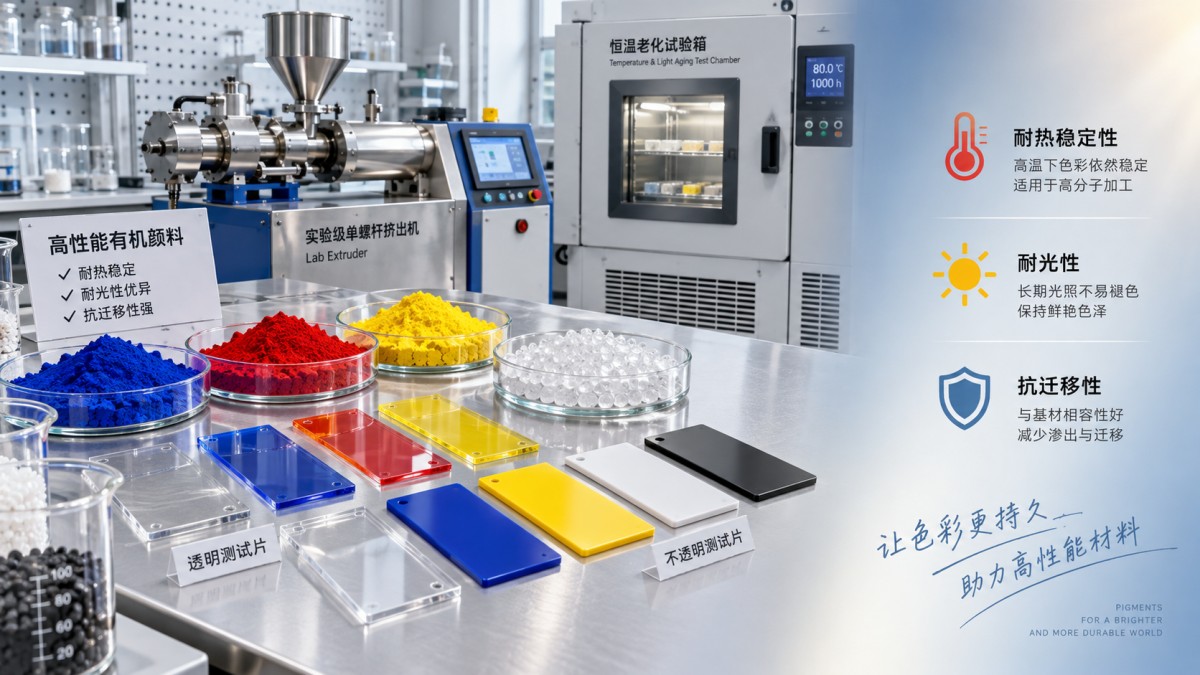
Dyestuffs and pigments behave differently in polyethylene, polypropylene, PVC, PET, polyamide, polystyrene, and engineering plastics because each resin has distinct polarity, crystallinity, and melt-processing conditions.
Record the actual melt temperature, residence time, shear level, and processing route. Injection molding, extrusion, film blowing, fiber spinning, and rotational molding expose colorants differently.
Heat stability should be evaluated against the highest realistic process temperature, not the nominal machine setting. Local overheating, prolonged residence, and repeated reprocessing can accelerate decomposition.
When a colorant degrades, the result may include fading, darkening, gas formation, plate-out, odor, or contamination of processing equipment. These failures often appear only during production trials.
For high-temperature polymers, request thermal stability data under relevant processing conditions. Testing should include color difference, melt appearance, and physical-property checks after realistic heat exposure.
Assess Lightfastness for the Actual End Use
Lightfastness measures a colorant's ability to resist fading or discoloration under light exposure. It is especially important for outdoor parts, automotive interiors, agricultural products, and consumer goods.
Do not treat a laboratory lightfastness rating as a universal guarantee. Performance changes with color concentration, polymer thickness, resin additives, surface texture, and geographical exposure conditions.
Thin films and lightly colored articles generally need stronger lightfastness than thick molded parts. Lower pigment loading can reduce UV screening and expose individual colorant particles more intensely.
Outdoor applications should be assessed with accelerated weathering and, where risk is high, natural exposure data. Include UV absorbers and hindered amine light stabilizers in representative formulations.
Technical evaluators should also distinguish fading from chalking or polymer degradation. A stable pigment cannot fully protect a resin system that loses gloss, cracks, or becomes yellow outdoors.
Control Migration, Bleeding, and Plate-Out Risks
Migration resistance is critical when colored plastics contact other polymers, coatings, textiles, packaging contents, adhesives, or skin. It determines whether color remains where it was intended.
Soluble dyestuffs can provide transparent, bright coloration, but their migration risk may be higher than insoluble pigments. Polymer affinity and end-use contact conditions determine suitability.
Evaluate migration using the relevant temperature, pressure, and contact material. A colorant that performs well in a rigid molded article may bleed in flexible PVC or multilayer packaging.
Plasticizer-rich formulations deserve particular scrutiny because plasticizers can dissolve or transport certain dyes and pigments. This can cause blooming, staining, surface tack, or uneven coloration.
Plate-out is another practical concern during extrusion and molding. Low compatibility, volatile impurities, or excessive dispersing additives may create deposits that affect appearance and production efficiency.
Choose Pigments or Dyestuffs Based on Appearance Requirements
Pigments are generally preferred when opacity, durability, migration resistance, and weatherability are priorities. Their insoluble particles scatter light and can provide strong hiding power in many plastics.
Dyestuffs are often selected for transparent or translucent applications where clarity and high chroma matter. They must be screened carefully for solubility, heat stability, and migration.
Organic pigments can deliver clean, vivid shades, while inorganic pigments often provide superior heat resistance, lightfastness, and opacity. Neither category is automatically better for every application.
Particle size and dispersion quality are equally important. Poor dispersion creates streaks, weak tint strength, filter pressure increases, and inconsistent shade between production batches.
Request application-specific samples rather than relying only on powder specifications. A well-dispersed masterbatch trial in the intended resin provides more useful evidence than isolated color measurements.
Build a Practical Colorant Qualification Plan
A robust qualification plan begins with a written end-use profile: resin grade, color target, processing window, thickness, service environment, regulatory requirements, and permitted cost range.
Next, compare candidate Dyestuffs and Pigments through controlled trials. Measure color difference, gloss, dispersion, heat stability, migration, lightfastness, and any relevant mechanical or odor impacts.
Define acceptance limits before testing. For example, specify allowable Delta E after processing and weathering, maximum staining in migration tests, and acceptable variation between production lots.
Quality documentation matters alongside performance data. Confirm batch traceability, technical data sheets, safety documentation, regulatory declarations, packaging integrity, and change-control expectations with the supplier.
For imported materials, consider lead time, packaging formats, storage stability, and continuity of supply. A technically approved pigment creates operational risk if consistent replacement supply is unavailable.
Make the Decision on Total Application Risk
The lowest-cost colorant is not necessarily the lowest-cost formulation. Failure costs can include rejected parts, cleaning downtime, customer complaints, reformulation work, and delayed product launches.
Technical evaluators should prioritize colorants that meet the required service performance with a manageable processing window. Excess performance may add unnecessary cost, while marginal performance creates instability.
For reliable procurement, work with suppliers able to confirm specifications, provide supporting documentation, coordinate sampling, and align packaging and delivery requirements with production planning.
In summary, effective selection of Dyestuffs and Pigments starts with polymer compatibility and processing temperature, then verifies lightfastness and migration resistance under real service conditions.
A disciplined, application-based trial program helps technical teams select colorants that preserve appearance, avoid production issues, and support consistent plastic product quality over time.
Related Posts
- ▶ How to Assess Traceability and Supply Risk When Sourcing Plant Extracts
- ▶ What Documentation Should Quality Teams Require for Personal Care Ingredients?
- ▶ Selecting Dyestuffs and Pigments for Plastics: Lightfastness, Migration, and Heat Stability
- ▶ When rising personal care ingredient prices require formula changes
- ▶ What causes shade variation in dyestuffs and pigments?
- ▶ How batch variability affects pharmaceutical raw material quality