



News
Explore our latest company updates, chemical market trends, technical knowledge, and industry developments.
What causes shade variation in dyestuffs and pigments?
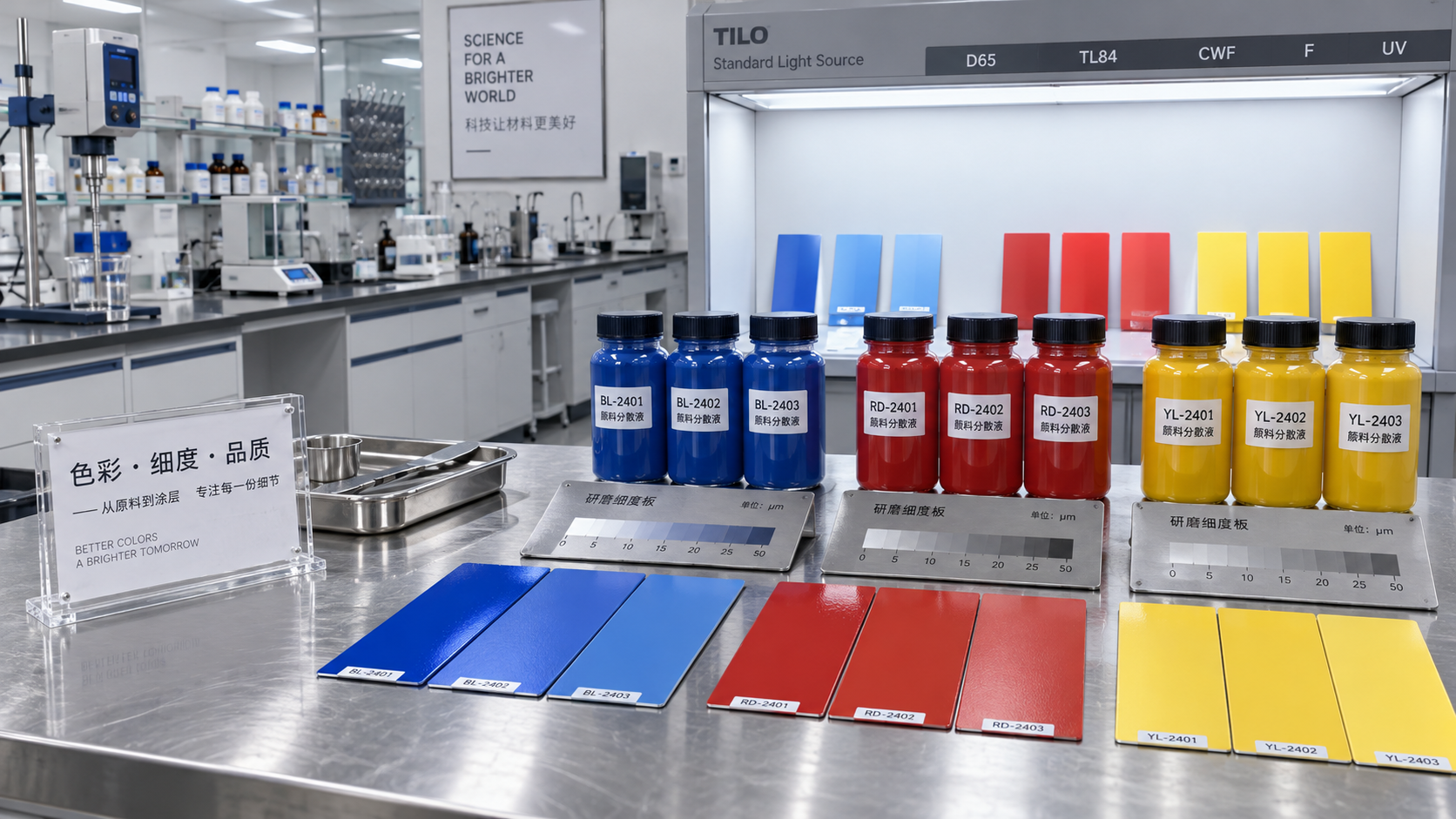
Shade variation is rarely caused by one factor alone. In dyestuffs and pigments, the visible color depends on the colorant’s chemical form, particle condition, concentration, dispersion quality, the substrate being colored, and the way the finished product is viewed. A batch can meet a basic color specification yet still appear different in production if one of these conditions changes.
The most useful way to control variation is to separate it into two questions: did the colorant itself change, or did the processing and viewing conditions change? This distinction prevents operators from repeatedly adjusting dosage when the real issue is dispersion, pH, resin behavior, drying, or lighting.
Colorant batch differences: strength is not the same as shade
Two lots of the same dye or pigment can have similar color strength but differ slightly in hue, saturation, or undertone. A small shift toward red, blue, yellow, or green may be highly visible in pale shades, neutral colors, and products produced alongside earlier batches.
For dyes, variation may arise from raw-material purity, reaction conversion, salt content, moisture level, and the amount or type of standardizing diluent used to set commercial strength. Reactive, acid, direct, and disperse dyes can also respond differently if their solubility or particle distribution changes between lots.
For pigments, crystal form is especially important. Some organic pigments exist in more than one crystalline form, and each form can reflect light differently. Changes in pigment particle size, surface treatment, agglomeration, or milling condition can alter not only color strength but also opacity, transparency, gloss, and undertone. Finer particles often produce stronger or cleaner color, but the relationship is not linear and depends on the pigment chemistry and application system.
Incoming-lot testing should therefore compare more than a visual drawdown. Where possible, retain an approved standard panel or standard batch and check shade, tinting strength, moisture, dispersibility, and application performance under the same conditions used in production.
Dispersion problems often look like a color problem
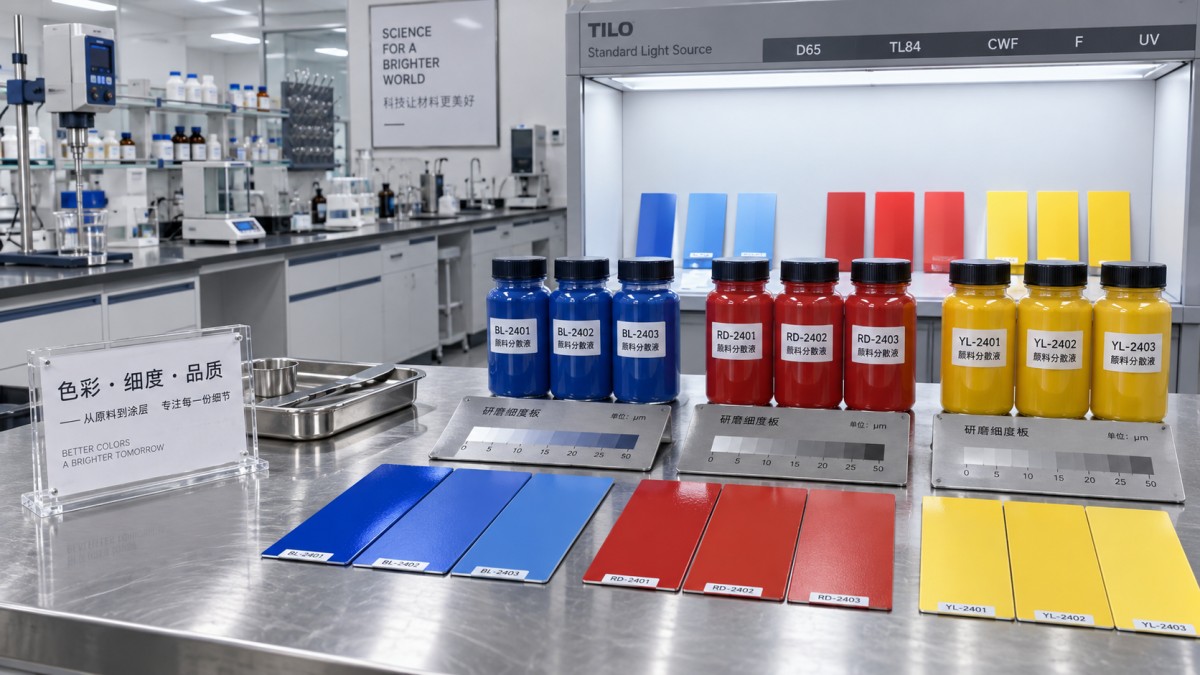
In pigment applications, incomplete dispersion is one of the most common causes of apparent shade variation. Pigment agglomerates do not distribute light in the same way as fully separated primary particles. The result may be a weaker, duller, darker, or less uniform appearance. Specks, streaks, floating, flooding, and reduced gloss are further signs that the issue is not simply incorrect pigment dosage.
Dispersion depends on the compatibility of the pigment with the resin, solvent, plasticizer, surfactant, dispersant, and grinding process. A pigment that performs well in one coating, ink, plastic, or rubber formulation may disperse poorly in another. Changing the order of addition, mixing speed, milling time, bead size, shear level, or let-down procedure can shift the final shade even when the same colorant is used.
Over-processing can also create problems. Excessive grinding may change particle-size distribution, damage sensitive pigment structures, introduce heat, or destabilize a dispersion. The target is a stable, reproducible dispersion state rather than the longest possible milling time.
Processing conditions can alter dye uptake and pigment appearance
Dyes are particularly sensitive to application conditions. In textile dyeing, changes in bath pH, temperature profile, salt or alkali addition, liquor ratio, water hardness, circulation, and dyeing time can change exhaustion and fixation. Uneven heating or delayed chemical addition may produce side-to-side or lot-to-lot differences even with an identical recipe.
For plastics, the resin grade, melt temperature, residence time, shear history, and moisture content can affect color development. Some pigments or dyes may darken, fade, migrate, or change undertone when exposed to high processing temperatures or incompatible additives. A shift in base polymer—from one supplier, grade, recycle-content level, or natural-color level to another—can be more visible than a minor difference in masterbatch dosage.
Coatings and inks are affected by film thickness, solvent evaporation, drying temperature, substrate absorption, gloss level, and orientation of effect pigments. A thinner film may appear lighter; a rough or matte surface may appear less saturated than a smooth, glossy surface using the same formulation.
The substrate and surrounding color matter
A colorant does not create the final shade independently. The whiteness, transparency, surface texture, and absorption of the substrate all influence appearance. A pigment in a clear medium gives a different visual result from the same pigment in an opaque, titanium-dioxide-containing system. Likewise, a dye applied to cotton, polyester, nylon, paper, leather, or a mixed substrate will not necessarily produce the same apparent hue.
Operators should avoid approving a color on a substitute panel when the production substrate differs in color, thickness, gloss, or surface finish. Color comparison must use representative material prepared at the intended application weight or concentration.
Lighting can create a false pass or a false failure
Two samples may match under one light source and differ under another. This phenomenon, called metamerism, occurs when materials have different spectral reflectance curves but appear similar under a specific illuminant. It is common when different pigment combinations are used to match a target shade.
Color approval under uncontrolled warehouse lighting, daylight near windows, or mixed LED sources can lead to inconsistent decisions. A controlled light booth with defined illuminants is preferable for critical matching. Visual assessment should also be supported by instrumental color measurement where production tolerances require it. Spectrophotometer results help identify whether a difference is mainly lightness, red-green direction, yellow-blue direction, or chroma, but the instrument must measure the same surface and geometry relevant to the finished product.
Practical control points
- Keep a retained standard for each approved shade and compare new colorant lots in the actual application system.
- Record lot number, dosage, moisture, pH, temperature, mixing or milling conditions, and substrate details whenever a shade is approved.
- Do not correct a dispersion defect by adding more pigment before checking fineness, agglomerates, viscosity, and compatibility.
- Use fixed addition sequences and controlled heating, drying, and residence-time conditions.
- Assess critical colors under controlled lighting and confirm uncertain matches on the final substrate, not only in the mixing vessel.
Consistent color comes from controlling the full system, not merely purchasing a colorant with the same name or nominal strength. When shade variation is investigated in a disciplined order—colorant lot, dispersion, process conditions, substrate, and viewing environment—the source usually becomes identifiable and repeatable correction becomes possible.
Related Posts
- ▶ How to Assess Traceability and Supply Risk When Sourcing Plant Extracts
- ▶ What Documentation Should Quality Teams Require for Personal Care Ingredients?
- ▶ Selecting Dyestuffs and Pigments for Plastics: Lightfastness, Migration, and Heat Stability
- ▶ When rising personal care ingredient prices require formula changes
- ▶ What causes shade variation in dyestuffs and pigments?
- ▶ How batch variability affects pharmaceutical raw material quality