



Solutions
From product selection and quality documentation to packaging and delivery, we help customers build a more reliable chemical supply chain.
How solvent choice affects plant extract consistency
How Solvent Choice Shapes Plant Extract Consistency
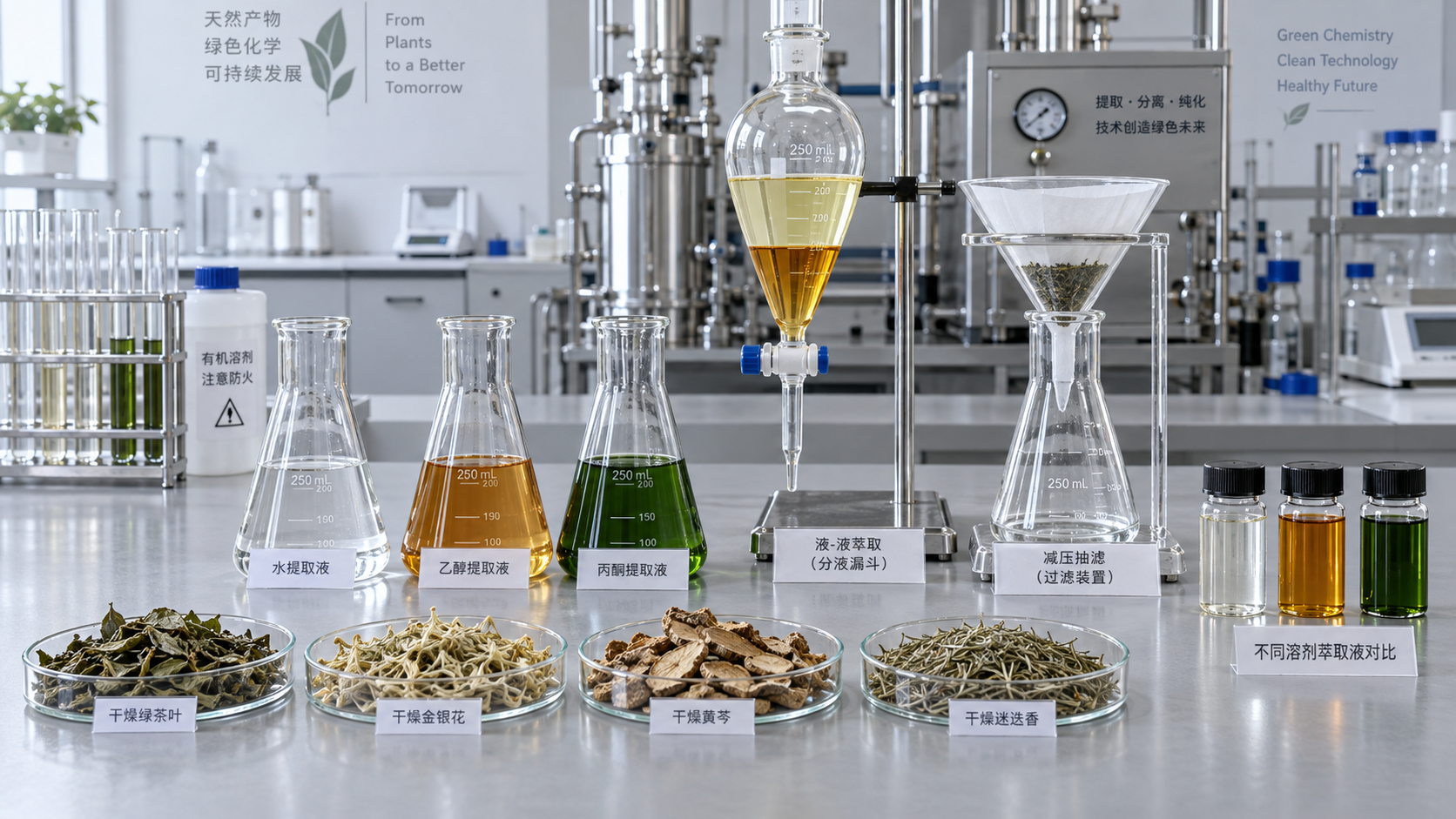
For Plant Extracts, the botanical name is only part of the technical identity. Two batches made from the same plant material can behave quite differently when different extraction solvents are used. One may have a stronger marker-compound profile; another may be darker, more aromatic, harder to dissolve, or less stable during storage. In practical evaluation, solvent choice is often the hidden variable behind these differences.
The solvent determines which parts of the plant matrix are pulled into the extract. It affects extraction yield, but yield alone is not a useful quality measure. A high-yield extract can contain more sugars, waxes, chlorophyll, resins, or other co-extractives than the intended active fraction. Technical teams should therefore assess solvent selection alongside assay methods, solvent residues, appearance criteria, and the intended formulation route.
Polarity determines what comes along with the target compounds
Water tends to recover highly polar constituents, including many carbohydrates, salts, tannins, and some polyphenols. It may be appropriate where a water-soluble extract is required, but it can also produce hygroscopic powders and greater variation in color or viscosity. Water-based processing also needs careful microbial control and drying management; a technically acceptable extract at release can still become difficult to handle if moisture uptake is not controlled later.
Ethanol-water systems are widely used because the ratio can be adjusted to tune selectivity. More water generally favors polar components, while a higher ethanol proportion can reduce the extraction of certain sugars and increase recovery of less polar phenolics, flavonoids, or aromatic fractions. That flexibility is useful, but it means “ethanol extract” is not a complete specification. Without the solvent ratio, extraction conditions, and marker basis, it leaves too much room for batch variation.
Less polar solvents may better recover lipophilic compounds, essential-oil-related fractions, pigments, and waxy materials. These extracts may have distinct odor, color, or dispersibility issues in finished products. A nonpolar fraction can be technically correct for one application and entirely unsuitable for a water-based beverage, tablet coating, or cosmetic gel.
Consistency is more than assay value
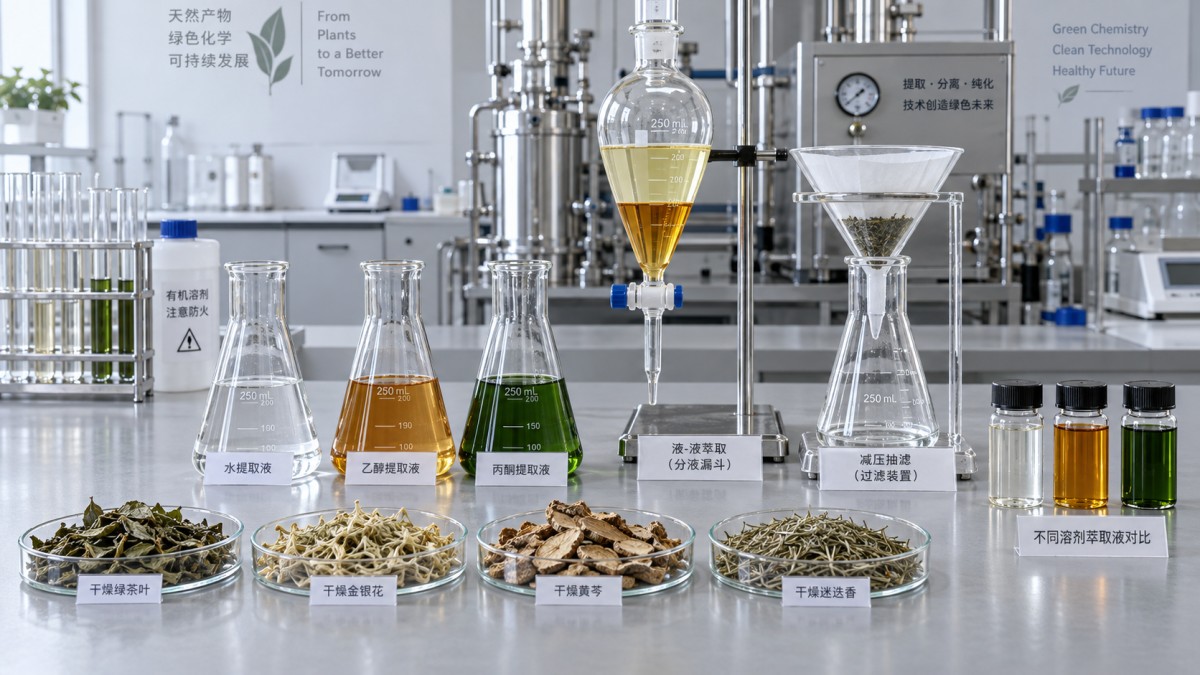
A common purchasing mistake is to compare Plant Extracts mainly by headline assay. The same assay result may be achieved through different extraction and concentration routes, with very different secondary profiles. Those differences can matter when the extract is blended with flavors, emulsifiers, pigments, pharmaceutical excipients, or agricultural formulations.
For example, a more selective solvent system may provide cleaner chromatographic behavior and lower interference in downstream testing. A broader solvent system may retain compounds that contribute to the desired sensory profile but also create stronger color variation. Neither option is automatically better. The right decision depends on whether the end user values marker concentration, full-spectrum composition, low odor, easy solubility, or visual uniformity.
Residual solvents need to be evaluated in context
Residual solvent review should not be treated as a paperwork exercise. Evaluators should confirm which solvent or solvent mixture was used, the analytical method applied, the reporting limit, and the acceptance criteria relevant to the intended market and application. Requirements may differ across food, cosmetic, feed, and pharmaceutical-related supply chains, so a generic “residual solvent compliant” statement is rarely enough for a technical file.
It is also sensible to ask whether the extract has been spray-dried, vacuum-concentrated, or processed with a carrier. These steps can improve handling, yet they may change bulk density, flowability, dissolution time, and the final concentration of the botanical fraction. If a carrier is present, its identity and proportion should be clear in the specification rather than buried in a general product description.
What a workable technical specification should clarify
- Botanical source, plant part, and declared extract ratio where applicable.
- Extraction solvent system and whether the stated ratio refers to solvent composition or extract concentration.
- Marker compounds, assay method, and acceptable batch range.
- Residual solvent requirements, moisture, microbial limits, and contaminant testing relevant to the application.
- Color, odor, particle size, solubility, and carrier information when these affect processing.
For industrial sourcing, the most reliable approach is to align these points before samples are approved. Jinan Suyu Chemical Co., Ltd. supports this process by coordinating sourcing, specification confirmation, quality documentation, packaging, and international delivery across plant extracts and other chemical raw materials. The useful question is not simply which solvent was used, but whether that solvent system produces an extract profile that remains fit for the customer’s formulation, testing method, and destination-market requirements.
Related Posts
- ▶ How to Assess Traceability and Supply Risk When Sourcing Plant Extracts
- ▶ What Documentation Should Quality Teams Require for Personal Care Ingredients?
- ▶ Selecting Dyestuffs and Pigments for Plastics: Lightfastness, Migration, and Heat Stability
- ▶ When rising personal care ingredient prices require formula changes
- ▶ What causes shade variation in dyestuffs and pigments?
- ▶ How batch variability affects pharmaceutical raw material quality